
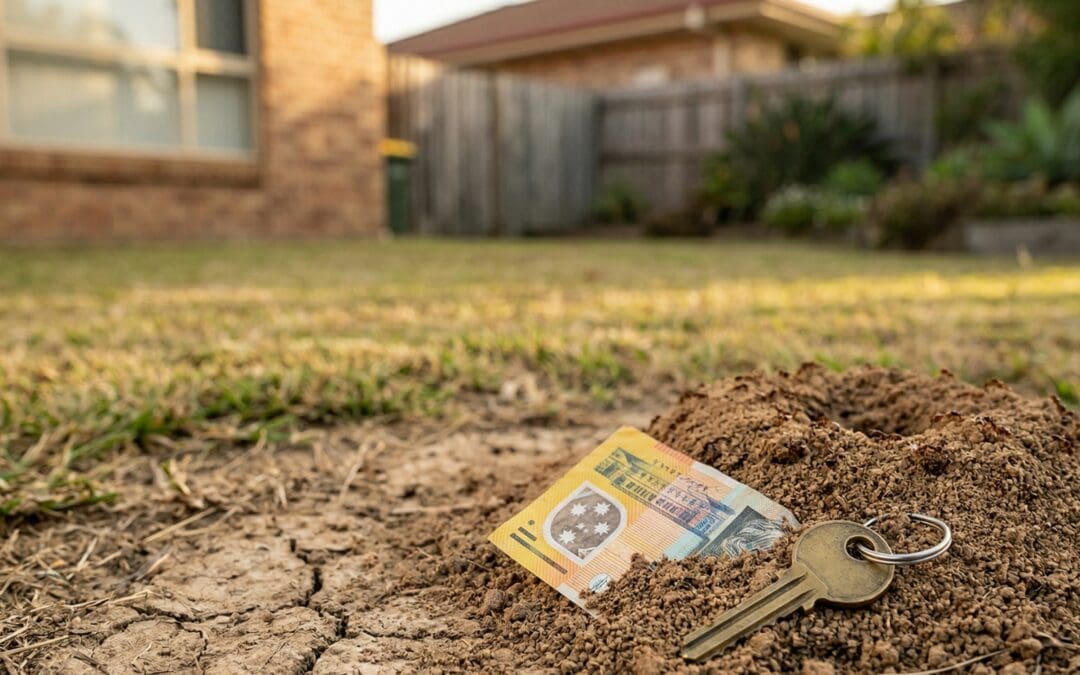
Most people think of fire ants as a backyard pest. Something that stings when you step on a mound. But the real damage fire ants cause goes far beyond stings. They destroy lawns, damage infrastructure, reduce property values, and create legal liabilities that many Queensland property owners do not see coming until it is too late.
Here is a breakdown of what fire ants actually cost property owners in Queensland, and why ignoring the problem is almost always more expensive than dealing with it.
Property Damage You Can See
The most visible damage fire ants cause is to lawns and landscaping. Fire ant colonies build extensive tunnel systems underground. These tunnels loosen and displace soil, killing grass roots and creating uneven, patchy ground. A well-maintained lawn can be destroyed within a single season if a fire ant colony takes hold.
Garden beds, retaining walls, and paved areas are also affected. Fire ant tunnels can undermine the soil beneath pavers and pathways, causing them to sink or shift. Retaining walls built on infested soil may develop structural issues over time as the ground beneath them becomes honeycombed with tunnels.
For residential property owners, the cost of repairing lawn damage, replacing landscaping, and fixing hardscaping can run into thousands of dollars. And if the colony is not eliminated first, the damage will simply repeat itself.
The Hidden Cost: Electrical and Infrastructure Damage
One of the lesser-known behaviours of fire ants is their attraction to electrical equipment. Fire ants are drawn to electrical currents and will nest inside junction boxes, air conditioning units, pool pumps, irrigation controllers, hot water systems, and switchboards.
Once inside, they chew through wiring insulation, cause short circuits, and can trigger equipment failures. In some cases, fire ant damage to electrical infrastructure has caused fires. The cost of repairing or replacing damaged electrical equipment can be significant, especially for commercial properties with complex systems.
Fire Ant Solutions has dealt with this exact problem firsthand. In one case in Redlands, Brisbane, fire ants caused serious damage to electrical infrastructure that required professional remediation. This type of damage is becoming more common as fire ant colonies spread into urban and suburban areas.
Impact on Property Values
Fire ant infestations can directly affect property values. Buyers in Queensland are becoming more aware of the fire ant problem, and properties with known infestations or a history of fire ant activity may face reduced buyer interest.
In the United States, studies have shown that fire ant infestations can reduce property values by 10% to 15% in heavily affected areas. While Australian data on this specific metric is still limited, the pattern is likely to follow as fire ants become more widespread across South East Queensland.
For property sellers, an active fire ant infestation at the time of sale can delay settlement, trigger renegotiation on price, or cause a sale to fall through entirely. Buyers are increasingly requesting pest inspections that specifically include fire ant checks.
Real estate agents working in fire ant zones should be aware of their disclosure obligations. Failing to address a known infestation before listing a property can create legal and financial complications down the line.
The Cost to Rural and Agricultural Properties
The financial impact on rural properties is often even higher than on residential ones. Fire ants damage agricultural land in several ways.
Livestock are at direct risk. Fire ants sting cattle, horses, poultry, and other farm animals, particularly young animals and newborns. Repeated stinging events cause stress, reduce weight gain, and can lead to secondary infections. In severe cases, fire ant stings can kill small or vulnerable animals.
Crop and pasture damage is another significant cost. Fire ant mounds interfere with mowing and harvesting equipment. Workers avoid areas with heavy fire ant activity, leaving patches of land unproductive. The mounds themselves damage tractor tyres and blades, adding maintenance and repair costs.
Soil movement restrictions are a further burden. Under Queensland biosecurity regulations, soil and organic material from fire ant biosecurity zones cannot be freely moved without meeting specific requirements. For farmers and rural contractors who regularly move soil, hay, mulch, and turf, these restrictions add time and cost to everyday operations.
Legal and Compliance Costs
Under the Biosecurity Act 2014, every Queenslander has a General Biosecurity Obligation (GBO) to take reasonable steps to prevent the spread of fire ants. This applies to individuals, businesses, and organisations.
For property owners, this means you are legally required to report suspected fire ant sightings within 24 hours. Depending on the location and nature of the infestation, you may also be required to take action to treat the problem. Penalties can apply if you fail to meet these obligations.
The compliance cost varies depending on the size and location of the property. For larger properties, meeting biosecurity requirements can involve professional inspections, treatment plans, and ongoing monitoring. These are not optional expenses. They are legal requirements.
Understanding what the Biosecurity Act requires of you is the first step in avoiding fines and protecting your property.
What Professional Treatment Actually Costs (and Saves)
Many property owners put off professional fire ant treatment because they assume it will be expensive. In reality, the cost of professional treatment is almost always less than the cost of the damage fire ants cause if left untreated.
Professional nest injection targets colonies directly, killing the queen and eliminating the colony at its source. This method avoids the scatter effect that happens with DIY approaches, where disturbed ants simply relocate and build new nests nearby.
The cost of professional treatment depends on the size of the property and the number of active nests. But when you weigh it against the combined cost of lawn repair, electrical damage, lost property value, livestock losses, and potential biosecurity fines, professional treatment is the more affordable option in almost every scenario.
Adding Up the Real Numbers
Here is a simplified picture of what fire ant damage can cost a typical Queensland property owner if the problem goes untreated:
Lawn and landscaping repair can cost $1,000 to $5,000 or more depending on the extent of damage. Electrical equipment repair or replacement ranges from $500 to $10,000 or more, depending on what is affected. Property value reduction, based on international data, could range from 10% to 15% of the property’s value. For a $600,000 home, that is $60,000 to $90,000 in lost value. Rural and agricultural losses vary widely but can reach tens of thousands of dollars per year on affected properties.
Biosecurity fines for non-compliance are set by the Queensland Government and can be substantial.
These are not hypothetical numbers. They represent the real financial exposure that Queensland property owners face when fire ants are left untreated.
Take Action Before the Costs Add Up
Fire ant damage does not happen all at once. It builds gradually, often below the surface where you cannot see it. By the time the damage is visible, the colony may have been established for months or even years.
The smartest financial decision you can make is to act early. A professional inspection and treatment plan costs a fraction of what you would spend repairing the damage later.
Get in touch with Fire Ant Solutions to arrange an assessment of your property and stop fire ant damage before it hits your wallet.