
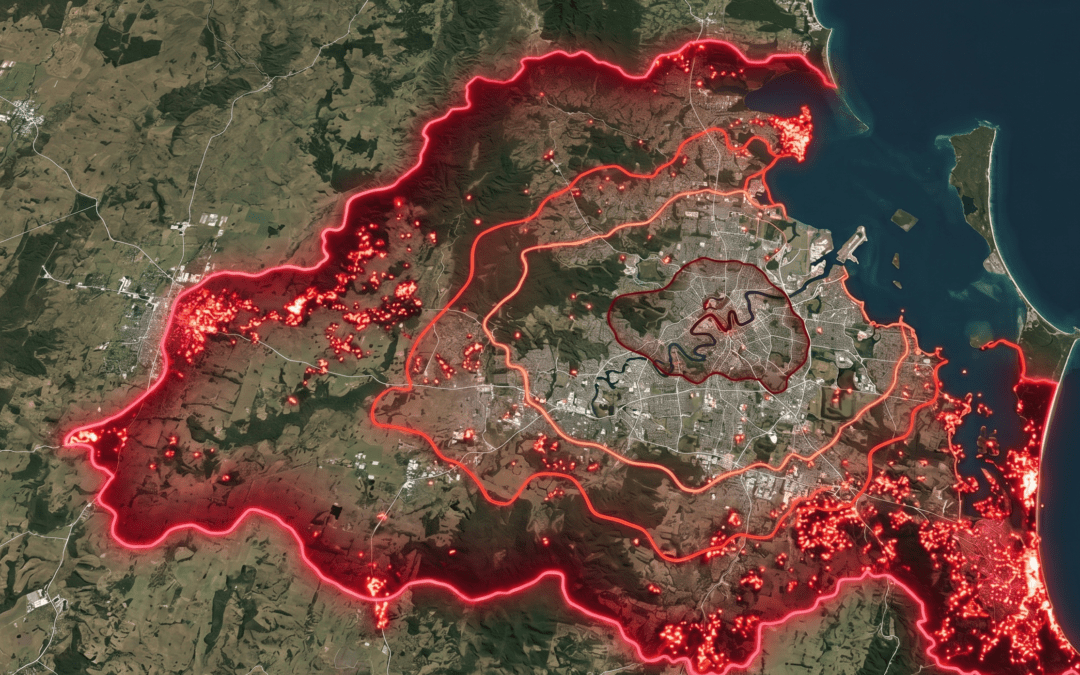
Australia has been fighting red imported fire ants since they were first detected in Brisbane in 2001. That is over two decades of government programs, hundreds of millions of dollars in funding, and a national eradication plan that was supposed to stop fire ants from becoming a permanent part of the Australian landscape.
So where do things actually stand in 2026? Are we winning, or are fire ants winning?
The answer depends on which numbers you look at. But the overall picture is not encouraging.
The Eradication Program: A Quick Background
The National Fire Ant Eradication Program (NFAEP) is the body responsible for finding, containing, and destroying fire ant colonies in South East Queensland. It operates under a 10-year plan that targets the known infestation zone, which stretches from Lockyer Valley in the west to Redlands in the east, north to Moreton Bay, and south to the Gold Coast.
The program uses a combination of aerial baiting, ground treatment, and surveillance to detect and treat fire ant colonies. It is funded jointly by the Australian, state, and territory governments.
On paper, it is the largest ant eradication effort in world history. In practice, results have been mixed.
The Spread Has Not Stopped
The most telling indicator of progress (or lack of it) is geographic spread. When fire ants were first found in 2001, the infestation covered a relatively small area around the Port of Brisbane. By 2026, fire ants have been confirmed across a much wider area of South East Queensland.
New detections continue to be reported in suburbs and regions that were previously considered clear. The areas affected by fire ants now include Brisbane, the Gold Coast, Ipswich, Toowoomba, Moreton Bay, and dozens of suburbs within those regions.
This expansion has happened despite ongoing treatment and surveillance. It raises a difficult question: is the eradication program slowing the spread, or just failing to keep up with it?
Funding: Too Little, Too Late?
One of the most common criticisms of Australia’s fire ant response has been funding. The program has received significant investment over the years, but critics argue it has never been funded at the level needed for true eradication.
Independent reviews have repeatedly recommended higher funding levels. In multiple instances, funding decisions have been delayed or spread across longer timeframes, giving fire ants more time to expand their range between treatment rounds.
When you compare Australia’s investment to the estimated cost of allowing fire ants to establish permanently, the funding gap becomes stark. Modelling by the Centre of Excellence for Biosecurity Risk Analysis (CEBRA) has estimated that if fire ants are not eradicated, they could cost Australia over $1 billion per year in agricultural, environmental, and public health impacts.
The cost of eradication, while substantial, is a fraction of the long-term cost of living with fire ants permanently.
What Other Countries Tell Us
No other country has successfully eradicated red imported fire ants after they became established. Not the United States, not China, not Taiwan, not any of the Caribbean nations where fire ants have taken hold.
In the United States, fire ants now infest over 300 million acres across the southern states. Annual costs exceed $6 billion. Multiple eradication attempts in the mid-20th century failed, and fire ants are now considered a permanent part of the landscape.
China has faced rapid fire ant spread since the early 2000s, with colonies now confirmed in multiple provinces. Despite aggressive treatment campaigns, containment has proven extremely difficult.
Australia remains the only country with a realistic chance of eradication, because the infestation here is still geographically concentrated. But that window is closing. Every year the infestation expands, eradication becomes harder and more expensive.
The Gap Between Government Treatment and Property-Level Action
One factor that does not get enough attention is the gap between government-led baiting programs and individual property treatment.
The NFAEP primarily uses broadcast baiting, which involves spreading bait granules across large areas. This method is effective at reducing fire ant populations over time, but it does not eliminate every colony. Nests that survive baiting rounds continue to grow and produce new queens that fly out to start new colonies.
At the property level, many homeowners and landowners assume that government baiting covers their property and that no further action is needed. This is not always the case. Government treatment rounds are scheduled on a rotation and may not reach every property every season. Properties between treatment rounds, or on the edge of baiting zones, can harbour active colonies that go untreated.
This is why professional fire ant control services exist alongside the government program. Property-level treatment using targeted methods like nest injection fills the gap that broad-scale baiting cannot cover.
The Numbers That Matter
Here are the key figures that paint the clearest picture of where things stand:
The infestation area has grown significantly since 2001, despite continuous treatment efforts. New detections continue to be reported in areas outside the known infestation boundary. The number of fire ant colonies detected each year remains high, which suggests established populations are reproducing faster than they are being eliminated. Funding levels, while substantial, have been described as insufficient by independent reviewers.
On the positive side, Australia’s program is the most advanced fire ant response in the world. Treatment methods continue to improve. Surveillance technology, including remote sensing and community reporting, is becoming more sophisticated. And public awareness of fire ants in Queensland is higher than ever before.
The question is whether these advantages are enough to outpace the biological reality of a species that reproduces quickly, spreads through soil movement and queen flights, and thrives in Queensland’s climate.
What This Means for Queensland Property Owners
Whether or not the national program achieves full eradication, the reality for property owners right now is straightforward: fire ants are present, they are spreading, and they cause real damage.
Waiting for the government program to solve the problem on your property is a gamble. The safest approach is to take responsibility for your own land by identifying and treating fire ant colonies as they appear.
Under the Biosecurity Act 2014, property owners have a legal obligation to report fire ant sightings and take reasonable steps to manage the risk. This is not optional. Penalties can apply for non-compliance.
If you have seen signs of fire ant activity on your property, whether that is mounds in your yard, ants swarming after rain, or stings on family members or pets, professional treatment gives you the fastest and most reliable path to elimination.
The Bottom Line
Australia is not yet losing the war on fire ants. But it is not clearly winning, either. The numbers show a persistent, expanding infestation that has so far resisted full eradication despite decades of effort and significant investment.
The good news is that eradication is still possible. The bad news is that the window to achieve it is narrowing. Every property that goes untreated contributes to the spread.
If fire ants are on your property, do not wait for someone else to fix it. Contact Fire Ant Solutions to arrange professional treatment and do your part to turn the numbers around.